Concrete Polishing vs Garage Floor Coating: Which Is Right for Your Facility?
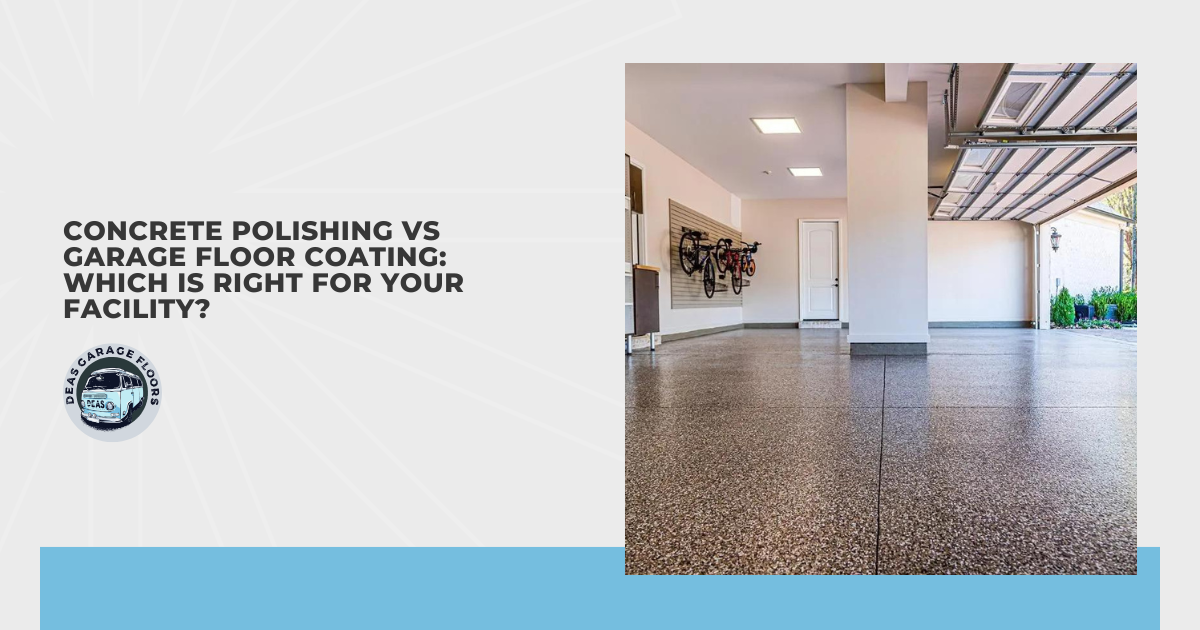
When it comes to flooring solutions for commercial and industrial facilities, two options tend to come up more than any other: concrete polishing and garage floor coating. On the surface, they might seem like they're solving the same problem, but the reality is that they're quite different in how they work, how they look, and how they hold up over time. Choosing between them isn't always straightforward, and making the wrong call can cost you more than just money.
I've seen facility managers and business owners struggle with this decision more times than I can count, and more often than not, it comes down to not having a clear picture of what each option actually offers. Both have real strengths, and both have scenarios where they simply aren't the right fit. Understanding those differences is what makes the difference between a floor that works for your facility and one that creates more problems than it solves.
Here's everything you need to know to make a confident, informed decision between concrete polishing and garage floor coating for your facility, including:
- What concrete polishing is and how it works
- What a garage floor coating is and how it works
- A side-by-side comparison of both options
- When concrete polishing is the better choice
- When a garage floor coating is the better choice
- How to make the right decision for your facility
First things first, let's take a closer look at each option on its own before putting them side by side.
What Concrete Polishing Is and How It Works
Concrete polishing is exactly what it sounds like, but there's a lot more to it than simply buffing a floor to a shine. It's a multi-step mechanical process that uses diamond-abrasive tools to grind down and refine the surface of an existing concrete slab, progressively moving through finer and finer grits until the desired level of sheen is achieved. The end result is a smooth, dense, and highly reflective surface that's part of the concrete itself rather than a layer applied on top of it.
One of the things that makes polished concrete so appealing is how it looks in the right setting. Depending on the level of polish and the condition of the underlying concrete, the finished floor can range from a low, matte sheen to a mirror-like high gloss that reflects light beautifully across a space. Decorative options like dyes and hardeners can also be incorporated into the process to add color and enhance the surface's durability, giving facility managers a degree of customization that's often underestimated.
From a performance standpoint, polished concrete is incredibly durable and long-lasting when properly maintained. It doesn't chip, peel, or delaminate the way some coatings can, and because the finish is achieved by densifying the concrete itself, there's nothing to wear away in the traditional sense. It works best in facilities with sound, high-quality concrete slabs, and in environments where a sleek, low-maintenance floor is a priority.
What a Garage Floor Coating Is and How It Works
A garage floor coating is a protective layer applied directly to the surface of a concrete slab, bonding to it chemically or mechanically to create a durable, finished surface. Unlike concrete polishing, which works with the existing concrete, a coating adds something entirely new on top of it, which opens up a much wider range of performance characteristics and aesthetic options depending on the product used. Epoxy, polyurea, polyaspartic, polyurethane, and metallic coatings are all examples of what falls under this category.
The application process typically begins with surface preparation, which is arguably the most critical step in the entire process. The concrete needs to be properly cleaned, repaired, and profiled so the coating has something to bond to. Skipping or rushing this step is one of the most common reasons coatings fail prematurely, and it's something I always emphasize when talking to facility managers who are weighing their options.
What makes garage floor coatings particularly versatile is the sheer range of finishes, colors, textures, and performance profiles available. A facility that needs heavy chemical resistance can choose a coating formulated for exactly that. A showroom prioritizing aesthetics can opt for a high-gloss metallic finish that turns heads. That kind of flexibility is a major reason why garage floor coatings remain one of the most popular flooring solutions in commercial settings.
A Side-by-Side Comparison of Both Options
Both concrete polishing and garage floor coatings are strong flooring solutions in their own right, but they perform very differently depending on the environment and demands of a facility. Here's a straightforward breakdown of how they stack up against each other across the most important decision factors:
| Factor | Concrete Polishing | Garage Floor Coating |
|---|---|---|
| Durability | Extremely durable; no peeling or delamination | Highly durable; longevity depends on coating type and quality of installation |
| Aesthetics | Sleek, natural concrete look; limited color options | Wide range of colors, finishes, and textures |
| Customization | Limited; dyes and stains can be added | Highly customizable to suit branding and design needs |
| Chemical Resistance | Moderate; can be enhanced with sealers | Excellent; especially with polyurea and polyaspartic coatings |
| Slip Resistance | Moderate; can be slippery when wet | High; especially with quartz and broadcast coatings |
| Installation Time | Longer; multiple grinding passes required | Varies; polyurea and polyaspartic cure in hours |
| Maintenance | Low; periodic re-densifying may be needed | Low to moderate; depends on coating type |
| Cost | Moderate to high upfront; low long-term cost | Varies widely depending on coating type chosen |
| Best For | High-traffic facilities with quality concrete slabs | Facilities needing chemical resistance, aesthetics, or slip resistance |
Think of this comparison as a compass, not a map, the details of your specific facility will always be the deciding factor. The right choice ultimately comes down to your specific space, how you use it, and what you need your floor to do for you day in and day out.
When Concrete Polishing Is the Better Choice
Concrete polishing tends to shine brightest in facilities where the existing concrete is in good condition and the priority is a clean, low-maintenance floor that doesn't require a lot of ongoing attention. Warehouses, retail spaces, office buildings, and large open facilities with heavy foot traffic are all environments where polished concrete consistently performs well. The key is having a solid foundation to work with, because the quality of the finished product is only as good as the concrete underneath it.
From a practical standpoint, polished concrete makes a lot of sense for facilities that want to minimize long-term maintenance costs. There's no coating to reapply, no film to peel or chip, and no topcoat to wear through over time. A well-executed polish job, properly maintained with routine cleaning and occasional re-densifying, can last for decades without needing a significant intervention.
Aesthetically, polished concrete works particularly well in spaces that lean toward a modern, industrial, or minimalist design sensibility. The natural variation in the concrete surface gives each floor a unique character that's difficult to replicate with any coating. That said, it's worth being upfront about one important limitation: if your concrete slab has significant cracks, staining, or surface defects, polishing will expose rather than hide them, and that's something worth factoring into your decision early on.
When a Garage Floor Coating Is the Better Choice
Let's start with something that doesn't get talked about enough: not every facility has perfect concrete, and that matters more than most people realize. Polishing works with what's already there, which means cracks, stains, and surface defects become part of the finished floor. A garage floor coating flips that dynamic entirely, giving facility managers the ability to repair, resurface, and transform a compromised slab into something that looks and performs like new.
Chemical exposure is where the gap between the two options becomes most obvious. Oil, fuel, hydraulic fluid, industrial solvents, these are things that polished concrete struggles to stand up to over time, even with sealers. Coatings, particularly polyurea and polyaspartic formulations, are engineered specifically for these conditions and hold up in ways that no amount of polishing can replicate.
Then there's the branding angle, which is worth more than people often give it credit for. Custom colors, safety line markings, decorative finishes, and even branded logos embedded directly into the floor are all well within reach with the right coating system. For customer-facing facilities where every detail of the space contributes to the overall experience, that kind of control over the final look is genuinely valuable and difficult to achieve any other way.
How to Make the Right Decision for Your Facility
Choosing between concrete polishing and a garage floor coating doesn't have to be overwhelming, but it does require an honest look at your facility's specific needs and conditions. These are the key questions worth working through before making your final call:
- What condition is your concrete in? Heavily cracked, stained, or damaged slabs are better suited for a coating system that can address those issues before finishing. Polishing works best when the underlying concrete is structurally sound and in relatively good shape.
- What kind of chemical or moisture exposure does your floor deal with? Facilities that regularly handle oil, fuel, solvents, or standing water need the chemical resistance that only a quality coating can reliably provide. Polished concrete, even with sealers, has its limits in these environments.
- How important is aesthetics and branding to your space? Coatings offer far more flexibility in terms of color, finish, and decorative options for customer-facing facilities. Polished concrete works beautifully in spaces that lean toward a clean, natural, industrial look.
- What is your budget and timeline for installation? Polished concrete can be more disruptive due to longer installation times, while certain coatings like polyurea and polyaspartic cure in a matter of hours. Upfront costs vary widely between both options, so factoring in long-term maintenance costs is just as important as the initial price tag.
- How much ongoing maintenance are you prepared to commit to? Both options are relatively low-maintenance, but coatings will eventually need to be reapplied or touched up over time. Polished concrete, on the other hand, can last decades with nothing more than routine cleaning and occasional re-densifying.
Getting clear on these questions puts you in a much stronger position to make a confident decision. When in doubt, consulting a professional installer who can assess your concrete and your facility firsthand is always the smartest move you can make.
Conclusion
Concrete polishing and garage floor coating are both excellent solutions, but they're not interchangeable, and the right choice depends entirely on what your facility actually needs. Understanding the strengths and limitations of each option is what separates a flooring decision you'll be happy with for years from one you'll be revisiting sooner than expected. Take what you've learned here, ask the right questions, and don't hesitate to bring in a professional who can look at your space with fresh eyes. The right floor is out there, and now you have everything you need to find it.

CONTACT INFO
DEAS Garage Floors
12210 Dargie Dr,
Arlington, TN 38002
Phone
SCHEDULE A CONSULTATION
Contact us, and we will come out and discuss your project free of charge.