How Polyaspartic Floor Coatings Compare to Other Garage Flooring Options
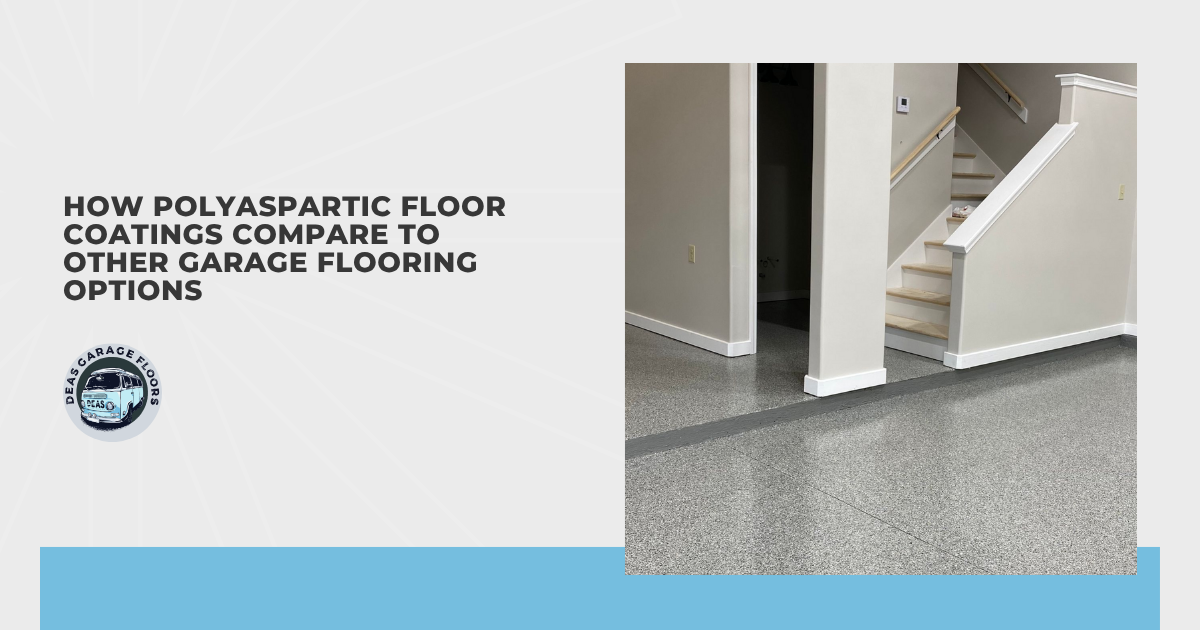
If you’re comparing garage flooring options, a polyaspartic floor coating stands out for its fast cure time, durability, UV stability, and resistance to everyday wear. In my experience installing garage floors, I’ve found that those qualities make polyaspartic very different from paint, epoxy, and other common flooring systems. Still, no single option works best for every garage or every homeowner. Your concrete condition, how you use the space, sun exposure, maintenance expectations, and budget all influence which flooring makes the most sense.
Polyaspartic belongs to the polyurea family of coatings, but manufacturers modify its chemistry to provide a more manageable application window and other useful performance characteristics. Once cured, it creates a hard-wearing surface that can handle vehicle traffic, spills, abrasion, and changing garage conditions. I also look beyond the coating itself because proper concrete preparation and installation play major roles in how well any garage floor performs over time.
To give you a clear picture of how a polyaspartic floor coating performs and compares with other garage flooring options, I’ll walk you through:
- Features of polyaspartic floor coatings
- Polyaspartic vs. painted concrete
- Polyaspartic vs. epoxy
- Polyaspartic vs. polyurea
- Polyaspartic vs. polyurethane
- Polyaspartic vs. garage floor tiles
- How the options compare at a glance
I’ll start with the key features that define polyaspartic coatings before comparing them with each alternative.
Features of Polyaspartic Floor Coatings
A polyaspartic floor coating creates a tough, seamless surface designed to handle the everyday demands of a garage. It resists abrasion, impacts, automotive fluids, and many common household chemicals, helping protect the concrete underneath from damage and staining. Polyaspartic coatings also cure quickly, allowing installers to apply multiple layers within a relatively short timeframe. In my experience, the faster cure can reduce how long your garage stays out of use, although it also gives installers less working time during application.
Beyond handling everyday wear, polyaspartic also performs well when your garage floor faces changing environmental conditions. UV-stable formulations resist the yellowing and discoloration that prolonged sunlight can cause in some epoxy coatings, which matters if you regularly leave your garage door open. The material also has some flexibility, allowing it to accommodate minor concrete movement better than more rigid coatings. However, even a durable coating cannot stop an active crack in the concrete from moving or eventually becoming visible through the finished floor. Proper crack repair and surface preparation therefore remain important parts of the overall system.
Those performance characteristics also influence what you can expect from the floor during everyday use. A nonporous finished surface makes oil, road grime, dirt, and other spills easier to clean before they work into the concrete, while decorative flakes and traction additives can add texture and grip. I pay close attention to concrete preparation, coating thickness, application conditions, and cure times because each one affects how well a polyaspartic floor coating performs over time. Ultimately, the coating’s features matter most when the installation allows the material to perform as intended.
Polyaspartic vs. Painted Concrete
When you compare a polyaspartic floor coating with painted concrete, the biggest difference lies in how each material bonds to and protects your garage floor. Garage floor paint creates a relatively thin film over the concrete, while a properly installed polyaspartic system forms a tougher, more durable surface. Paint can improve the look of bare concrete at a lower initial cost, but it generally offers less resistance to abrasion, impacts, chemicals, and hot tires. If your garage sees regular vehicle traffic or workshop use, those differences can become noticeable over time.
Surface preparation also affects both options, although the demands of a coating system usually go beyond basic preparation for paint. I typically look at the concrete’s condition, contamination, cracks, and surface profile because polyaspartic needs a properly prepared substrate to develop a strong bond. Paint may seem more approachable for a DIY project, but skipping proper cleaning and preparation can still lead to peeling or poor adhesion. Polyaspartic installation requires more specialized preparation and careful control over application because the material cures quickly. As a result, the installation process involves more than simply rolling a new finish over the slab.
Your priorities ultimately determine which approach makes more sense. Painted concrete can suit a garage where you mainly want a cleaner appearance and prefer a lower upfront investment, especially if you accept periodic touch-ups or repainting. A polyaspartic system makes more sense when durability, stain resistance, easier cleaning, and long-term performance carry greater weight in your decision. I encourage homeowners to think about how they actually use the garage rather than judging these options by appearance alone.
Polyaspartic vs. Epoxy
Epoxy often enters the conversation when you start comparing a polyaspartic floor coating with other garage flooring systems. Both create a bonded surface over prepared concrete and can provide strong resistance to abrasion, stains, and everyday garage traffic. I pay particular attention to cure time because epoxy generally cures more slowly, giving installers a longer working window but requiring more time before you can use the floor again. Polyaspartic cures much faster, which shortens that downtime but requires installers to work efficiently and carefully during application.
Sunlight and concrete movement reveal another important distinction between the two materials. Standard epoxy formulations can yellow or lose color after prolonged UV exposure, while UV-stable polyaspartic coatings resist those changes more effectively. Polyaspartic also offers greater flexibility than many rigid epoxy formulations, which can help it accommodate minor movement in the slab. Neither material, however, can stop an active crack from continuing to move or eventually becoming visible through the finished surface. Your garage conditions therefore matter just as much as the performance characteristics listed on a product.
Epoxy still has qualities that can make it a practical option, particularly when a longer application window or lower material cost carries more weight in your decision. A properly prepared and installed epoxy floor can deliver durable performance, especially in a garage with limited UV exposure. By comparison, polyaspartic tends to make more sense when you place greater value on faster curing, UV stability, and flexibility. Looking at those tradeoffs gives you a more useful comparison than simply labeling one coating as better than the other.
Polyaspartic vs. Polyurea
Comparing a polyaspartic floor coating with polyurea can get confusing because the two materials share a close chemical relationship. Polyaspartic coatings belong to the broader polyurea family, but manufacturers modify their chemistry to create a more manageable working time. Traditional polyurea generally cures extremely quickly, which can shorten installation time but leave installers little room for error. Polyaspartic slows that reaction enough to allow greater control during application.
Their performance characteristics overlap in several areas, including strong resistance to abrasion, impacts, and many chemicals commonly encountered in garages. Both materials also offer more flexibility than many traditional epoxy formulations, which helps them tolerate minor movement in the concrete. UV performance requires a closer look because not every polyurea formulation provides the same resistance to sunlight. When I evaluate these products, I look at the specific chemistry rather than relying on the label alone. Aliphatic polyaspartic formulations offer strong UV stability, making them particularly useful on garage floors that regularly receive sunlight.
For your garage, the practical distinction often comes down to the formulation, where the installer uses it within the flooring system, and the conditions during application. Some systems pair a fast-curing polyurea base coat with a UV-stable polyaspartic topcoat, so choosing between the two does not always reflect how installers actually build a garage floor. You should compare complete coating systems rather than assume every product carrying either name will perform identically. A clear understanding of what each layer contains will tell you far more about the floor than the product category alone.
Polyaspartic vs. Polyurethane
Polyurethane and polyaspartic both provide durable finishes, but they play somewhat different roles in garage flooring systems. Polyurethane commonly serves as a protective topcoat rather than the primary coating applied directly to concrete. It offers good resistance to abrasion, chemicals, and UV exposure, while its relatively flexible finish can stand up well to regular garage traffic. Polyaspartic can provide many of those same qualities while curing considerably faster, which changes both the installation process and the amount of downtime you can expect.
Working time highlights one of the practical differences between them. Polyurethane generally gives installers more time to apply and level the material, while the faster reaction of a polyaspartic floor coating demands a quicker, more controlled application. Faster curing can get a garage back into service sooner, but speed alone does not make one material better for every project. I look at how each product will function within the entire flooring system because the base coat, decorative layer, and topcoat all contribute to the finished floor’s performance. Product chemistry also varies among manufacturers, so comparing specific formulations matters more than relying solely on category names.
For you as a homeowner, the choice often makes more sense when you think about the role each coating needs to perform. Polyurethane can work well as a durable finish coat when longer cure times do not present a problem, while polyaspartic combines protective qualities with a much faster return to service. Both can offer strong UV and wear resistance when you choose formulations designed for those conditions. The better fit ultimately depends on the complete flooring system, your garage environment, and the performance you expect from the finished surface.
Polyaspartic vs. Garage Floor Tiles
Garage floor tiles take a completely different approach from coatings because they sit over the concrete rather than bonding directly to it. Most garage tile systems use interlocking pieces made from rigid plastic, flexible PVC, or similar materials, which makes individual sections easier to replace if they become damaged. You can also choose from different colors and patterns to customize the floor without permanently altering the concrete underneath. A polyaspartic floor coating, by comparison, creates a seamless surface that becomes part of the prepared concrete floor system. For homeowners deciding between the two, the distinction often comes down to whether you prefer a removable floor covering or a bonded finish.
Daily use brings out other differences. Interlocking tiles have seams where dirt, water, and other liquids can collect or work their way underneath, depending on the tile design and installation. A seamless polyaspartic surface eliminates those joints, making routine sweeping and cleaning more straightforward. When I evaluate a garage where moisture may be present, I also consider how each system handles water because trapping moisture beneath a covering can create maintenance concerns. Tiles can still make practical sense when easy replacement or access to the original concrete matters more to you than having a seamless surface.
Neither option automatically suits every garage, so your priorities should guide the comparison. Tiles give you design flexibility, straightforward replacement of damaged pieces, and the ability to remove the flooring later. Polyaspartic provides a permanently bonded finish with strong resistance to abrasion, spills, and regular vehicle traffic when installers prepare and apply the system correctly. If you weigh those differences against how you use your garage, you can decide whether the flexibility of tiles or the seamless character of a coating better fits the space.
How the Options Compare at a Glance
With several materials to consider, seeing their main differences side by side can make the decision easier. I use factors such as durability, UV stability, installation time, maintenance, and overall tradeoffs when comparing a polyaspartic floor coating with other garage flooring options
| Garage Flooring Option | Durability | UV Stability | Installation / Cure Time | Chemical & Stain Resistance | Maintenance | Key Tradeoff |
|---|---|---|---|---|---|---|
| Garage Flooring Option | High resistance to abrasion, impacts, and regular vehicle traffic | High with UV-stable formulations | Fast curing and relatively quick return to service | High | Easy to clean due to its seamless, nonporous finish | Fast curing demands careful preparation and skilled application |
| Painted Concrete | Lower resistance to wear and hot tires | Varies by product | Generally straightforward to apply, but drying and recoating times vary | Lower than coating systems | May require touch-ups or repainting | Lower upfront cost comes with less durability |
| Epoxy | High when properly installed | Standard formulations can yellow with UV exposure | Slower curing than polyaspartic | High | Relatively easy to clean | Longer cure time and greater sensitivity to UV exposure |
| Polyurea | High resistance to abrasion and impacts | Varies by formulation | Very fast curing | High | Relatively easy to maintain | Extremely short working time can make application more demanding |
| Polyurethane | High wear and abrasion resistance | Generally good with UV-stable formulations | Typically slower than polyaspartic | High | Relatively easy to clean | Commonly used as a topcoat rather than a complete floor system on its own |
| Garage Floor Tiles | Varies by tile material and construction | Varies by product | No coating cure time; installation time depends on the space | Varies by material | Surface cleaning is simple, but debris or liquids can reach beneath some tile systems | Replaceable and removable, but seams prevent a fully bonded, seamless surface |
No option leads every category, so the best fit depends on how you use your garage and which performance characteristics matter most to you. The comparison becomes more useful when you consider the entire flooring system rather than judging a material by one advantage alone.
Conclusion
Choosing a garage floor comes down to understanding what you expect from the space and how each material meets those needs. A polyaspartic floor coating offers a strong combination of durability, fast curing, UV stability, and straightforward maintenance, while epoxy, polyurea, polyurethane, paint, and floor tiles each bring their own advantages and tradeoffs. From my experience with garage flooring, I find it more useful to compare the complete flooring system than to judge any option by a single feature. Your concrete condition, garage use, sun exposure, maintenance preferences, and budget should all factor into the decision. Once you weigh those considerations together, you can choose a floor based on how it will actually perform in your garage.

CONTACT INFO
DEAS Garage Floors
12210 Dargie Dr,
Arlington, TN 38002
Phone
SCHEDULE A CONSULTATION
Contact us, and we will come out and discuss your project free of charge.