Best Garage Floor Coating Solutions for Dealerships & Showrooms
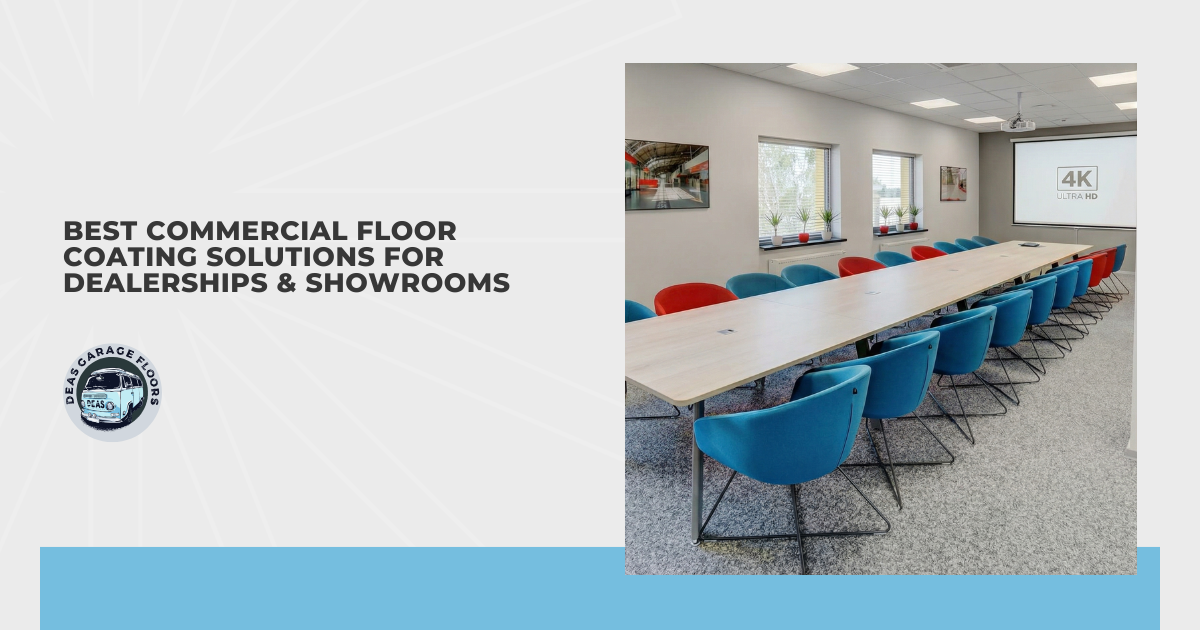
When most people think about what makes a dealership or showroom impressive, they think about the vehicles on display, the lighting, or the overall layout. What often goes unnoticed, at least consciously, is the floor underneath it all. In my experience, the floor is one of the most underestimated elements of a well-designed commercial space. A well-chosen commercial floor coating does more than just protect the concrete beneath it, it sets the tone for your entire space, communicates professionalism, and holds up under the kind of daily punishment that most floors simply aren't built for.
Dealership and showroom floors face a unique set of challenges that go beyond what you'd find in a typical commercial setting. Heavy vehicle traffic, chemical spills from oil and brake fluid, foot traffic from staff and customers, and the constant need to look clean and polished all place serious demands on whatever coating you choose. The right coating performs reliably day after day, looks great doing it, and doesn't demand constant upkeep to stay that way.
These are the best commercial floor coating options worth considering for your dealership or showroom, and tips on how to choose the right one for your space:
- Epoxy coatings
- Polyurea and polyaspartic coatings
- Metallic coatings
- Quartz and decorative broadcast coatings
- Polyurethane coatings
- How to choose the right coating for your space
The right coating is out there, and we're about to break down exactly what makes each one worth considering.
Epoxy Coatings
Epoxy is one of the most widely used commercial floor coating options on the market, and for good reason. It's a two-part system made up of a resin and a hardener that, when combined, creates a thick, durable surface that bonds tightly to concrete. For dealerships and showrooms, that combination of strength and versatility makes it a go-to starting point for a lot of facility managers and business owners.
On the performance side, epoxy holds up well against heavy foot traffic, vehicle loads, and the occasional chemical spill. It's relatively easy to clean, resistant to staining, and available in a wide range of colors and finishes that can be tailored to match a showroom's branding or aesthetic. I've seen epoxy floors completely transform the look and feel of a commercial space, taking it from a plain concrete slab to something that looks polished and intentional.
That said, epoxy does have its limitations. It can be prone to yellowing over time when exposed to UV light, which is worth considering for showrooms with large windows or skylights. Surface preparation is also critical with epoxy, and a poor installation can lead to peeling or bubbling down the line. For dealerships and showrooms looking for a reliable, cost-effective commercial floor coating with a proven track record, epoxy is a solid choice, though it's worth weighing those limitations before committing.
Polyurea and Polyaspartic Coatings
If you're looking for a step up from traditional epoxy in terms of performance and turnaround time, polyurea and polyaspartic coatings are worth a serious look. These two are often talked about together because they share a lot of the same strengths, but what really sets them apart from other commercial floor coatings is how quickly they cure and how well they hold up under pressure.
One of the biggest advantages here is cure time. Polyurea and polyaspartic coatings can cure in as little as a few hours, which means less downtime for your dealership or showroom during installation. For a business that can't afford to shut down for days at a time, that alone makes these coatings an attractive option. They're also significantly more flexible than epoxy, which makes them more resistant to cracking under heavy vehicle loads and temperature fluctuations.
On the durability front, these coatings outperform epoxy in several key areas. They're highly resistant to UV light, which means they won't yellow or fade the way epoxy can over time, and their chemical resistance makes them well-suited for service bays and areas where oil, fuel, and other fluids are a regular presence. All things considered, they're one of the most well-rounded options on this list for dealerships and showrooms that can't afford to compromise on performance.
Metallic Coatings
Walk into a showroom with a metallic floor and you'll notice it immediately. There's a depth and visual richness to it that other commercial floor coatings simply can't replicate, and for dealerships that want their space to feel as premium as the vehicles they're selling, that distinction matters. Metallic coatings bring an element of artistry to the floor that turns an otherwise functional surface into a genuine design statement.
The look comes from metallic pigments blended into an epoxy or polyaspartic base, which are then manipulated during application to produce flowing, three-dimensional effects. Marble, molten metal, ocean waves, the range of finishes achievable is remarkably broad, and because each floor is applied by hand, no two installations ever look the same. For a brand looking to create a truly memorable customer experience, that level of uniqueness is difficult to put a price on.
Performance-wise, metallic coatings are no slouch either. They resist stains, handle chemical exposure well, and clean up easily thanks to their high-gloss finish. Cost is the one area where they stand apart from other options on this list, as the complexity of the application process does push the price higher. Showrooms with a strong focus on aesthetics and brand experience, however, tend to find the investment well-justified.
Quartz and Decorative Broadcast Coatings
Not every part of a dealership or showroom needs to make a design statement, and that's exactly where quartz and decorative broadcast coatings earn their place. Service bays, wash areas, entryways, and utility spaces all have one thing in common: they need a floor that prioritizes safety and durability above everything else. Quartz and broadcast coatings were built with precisely those demands in mind.
Colored quartz granules or decorative flakes are broadcast into a wet epoxy or polyaspartic base during application, creating a textured, slip-resistant surface that holds up exceptionally well under wet and high-traffic conditions. The texture isn't just a safety feature though, it also adds a clean, finished look that works well in both back-of-house and customer-facing areas. Color and aggregate options are broad enough to complement almost any design scheme without drawing attention away from the vehicles on the floor.
What makes these coatings particularly valuable in a dealership setting is their ability to handle heavy abrasion without showing wear quickly. The embedded aggregate essentially becomes part of the floor itself, adding a layer of hardness that standard coatings can't match. Grip, longevity, and low maintenance are what these coatings do best, and in the right areas of a dealership, that's everything you need.
Polyurethane Coatings
Polyurethane often gets overlooked in conversations about commercial floor coatings, usually because epoxy and polyaspartic tend to dominate the discussion. That's a shame, because polyurethane brings a distinct set of qualities to the table that make it genuinely worth considering, particularly for dealerships and showrooms operating in spaces with significant temperature swings or heavy UV exposure.
Flexibility is where polyurethane really distinguishes itself. Unlike epoxy, which is a rigid coating, polyurethane has a degree of give that allows it to absorb impact and flex slightly under stress without cracking or delaminating. Concrete floors naturally expand and contract with temperature changes, and a coating that can move with the substrate rather than against it tends to hold up significantly better over the long term.
UV stability is another area where polyurethane pulls ahead of some of the other options on this list. It resists yellowing and fading far better than standard epoxy, which makes it a strong candidate for showrooms with abundant natural light. It's also worth noting that polyurethane is frequently used as a topcoat over epoxy base coats, combining the adhesion strength of epoxy with the UV resistance and flexibility that polyurethane brings. That layered approach is something I've seen work particularly well in showroom environments where both performance and appearance need to hold up over time.
How to Choose the Right Coating for Your Space
With so many strong options available, narrowing down the right commercial floor coating for your dealership or showroom can feel like a lot to sort through. The truth is, the best choice depends on a combination of factors that are unique to your space, your budget, and how you use your facility. Working through these key considerations will point you in the right direction.
- What areas need to be coated? Different zones in a dealership have different demands. Showroom floors, service bays, wash areas, and entryways each benefit from different coating types, so mapping out your space before making a decision is a smart first step.
- How much traffic and vehicle weight will the floor handle? High-traffic areas with heavy vehicles need coatings with superior compressive strength and abrasion resistance. Polyurea, polyaspartic, and quartz broadcast coatings tend to perform best under these conditions.
- How important is aesthetics to your brand? For customer-facing showroom floors, the visual impact of your coating is part of your brand experience. Metallic coatings and high-gloss epoxy finishes are worth prioritizing if first impressions are a major concern.
- What is your tolerance for downtime during installation? Some coatings require longer cure times than others, which means more time with your facility out of commission. Polyurea and polyaspartic coatings are your best bet if a fast turnaround is a priority.
- What is your budget, both upfront and long-term? Epoxy tends to be the most cost-effective entry point, but higher-end options like polyurethane and metallic coatings often deliver better longevity and lower maintenance costs over time. Thinking about total cost of ownership rather than just upfront price leads to better decisions.
No matter where you land on these questions, consulting a professional installer before committing is always a worthwhile step. An experienced installer can assess your concrete substrate, identify any existing issues that need to be addressed before coating, and recommend the option that makes the most sense for your specific situation. The right guidance upfront can save you a lot of time, money, and frustration down the road.
Conclusion
Choosing the right commercial floor coating for your dealership or showroom is one of those decisions that pays dividends long after the installation is done. The right coating protects your investment, elevates your space, and holds up under the kind of daily demands that most floors simply aren't designed for. Whether you're drawn to the proven reliability of epoxy, the fast cure time of polyurea and polyaspartic, the visual drama of metallic coatings, or the safety-first practicality of quartz and broadcast options, there's a solution on this list that fits your space and your goals. Take the time to assess your needs honestly, consult a professional, and choose a coating that works as hard as your business does.

CONTACT INFO
DEAS Garage Floors
12210 Dargie Dr,
Arlington, TN 38002
Phone
SCHEDULE A CONSULTATION
Contact us, and we will come out and discuss your project free of charge.