How Much Does Polyaspartic Floor Coating Really Cost?
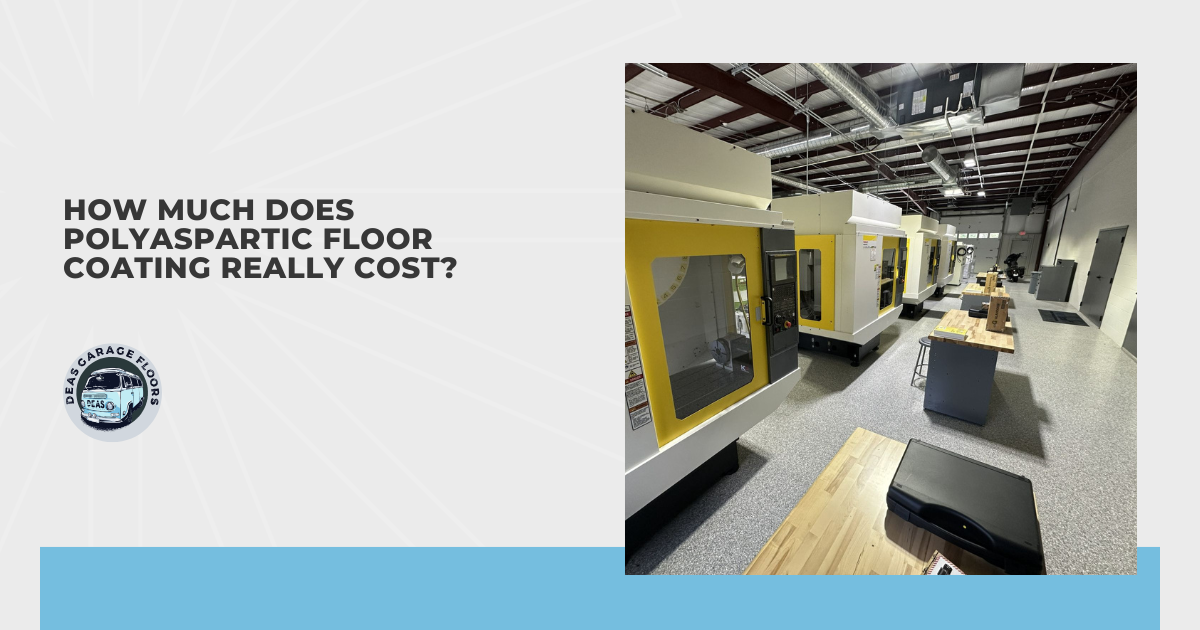
If you’re researching polyaspartic floor coating in Memphis, cost is probably one of the first things you want clarity on. It’s a high-performance garage floor option, and the pricing can feel confusing at first. From a professional standpoint, I can tell you that the cost is never random. It’s shaped by specific details of your garage and the type of result you’re aiming for.
One thing worth knowing upfront is that polyaspartic flooring doesn’t have a flat, universal price. Two garages with the same square footage can land at different price points depending on surface condition, preparation needs, and design choices. Understanding these variables helps explain why quotes vary and what truly drives the final cost.
Below, I’ll break down the main cost factors that influence a polyaspartic floor coating, share a realistic price range, and explain what makes this system worth considering for your garage.
- Garage size and square footage
- Surface condition and preparation requirements
- Number of coating layers and system build
- Design options, colors, and decorative finishes
- Installation quality and workmanship
- Local labor and material costs
- Average cost range for polyaspartic floor coating
- What makes polyaspartic floor coating worth the cost
Keep reading if you want a clearer picture of what goes into the price and how to evaluate your options.
Garage Size and Square Footage
Garage size is one of the clearest factors that affects the cost of a polyaspartic floor coating. More square footage means more material to apply and more time spent installing the system. Even modest differences in size can change the final price once coatings, flakes, and topcoats are calculated per square foot. That’s why knowing the true size of your garage matters from the start.
Layout goes beyond basic square footage. If your garage has steps, tight corners, stem walls, or multiple bays, the installation takes more time and attention to detail. Those features slow down application and increase labor needs. A simpler, open layout is typically quicker and more efficient to coat.
When you’re comparing quotes, pay attention to how the space was measured. What looks like a standard two-car garage can vary quite a bit once everything is accounted for. Clear measurements help you understand why prices differ and reduce surprises as the project moves forward.
Surface Condition and Preparation Work
Surface preparation is a major part of any polyaspartic floor coating project, but not every concrete issue affects pricing. Minor cracks, small surface imperfections, and oil stains are common in garages and are already accounted for in standard prep work. These conditions are addressed during grinding and repair and typically don’t change the overall cost of installation.
What does impact pricing is whether your concrete already has an existing coating or clear sealant that needs to be removed. Old epoxy systems, DIY paint kits, or sealed concrete surfaces require more aggressive preparation before a new coating can be applied. Additional diamond-grinding passes and specialized tooling are needed to fully remove those layers so the new polyaspartic floor coating can bond properly.
In practice, a significant portion of garages already have some type of coating in place, often from a previous upgrade. I see this on roughly 40% of the floors we install, most commonly older epoxy systems or DIY paint kits. When removal is required, it adds time and labor to the project, which usually increases the cost by about $0.50 to $1.00 per square foot, depending on the coating type and condition. While this step adds to the upfront price, it’s critical for adhesion and long-term durability, and skipping it often leads to coating failure down the road.
Number of Coating Layers and System Build
The number of layers in a polyaspartic floor coating system has a direct effect on overall cost. A simpler system may include a base coat and a clear topcoat, while more advanced systems add a full flake broadcast and additional protective layers. Each added layer increases material use and installation time. That added build is what improves strength and longevity.
System build also shapes how the floor performs and holds up over time. Thicker systems tend to handle daily wear, moisture, and temperature swings more effectively. Homeowners often see this as the difference between a light coating and a true flooring system. I usually bring this up during consultations so expectations stay clear.
Comparing quotes is easier once you know how many layers are included. Two prices can appear close while offering very different levels of protection and lifespan. Understanding the system build helps you judge value, not just the number at the bottom of the estimate.
Design Options and Customization
Design choices play a noticeable role in the cost of a polyaspartic floor coating. Colors, flake blends, and finish levels all affect material usage and installation time. Solid-color floors are more straightforward, while full flake systems involve additional steps and coverage. Those differences are reflected in the final price.
Customization also adds complexity to the process. Even flake distribution, clean transitions, and consistent texture take time to achieve. More detailed designs require a slower, more controlled application. That added time is part of what creates a polished, professional result.
As you explore design options, it helps to think about how your garage is actually used. Some finishes focus more on appearance, while others emphasize traction or ease of maintenance. Knowing how customization affects cost makes it easier to choose a design that fits both your needs and your budget.
Installation Quality and Workmanship
Installation quality plays a major role in the cost of a polyaspartic floor coating. I see it as the difference between a floor that looks good at first and one that continues to perform over time. Skilled labor, professional equipment, and controlled application all take time. That investment shows up in the price.
The way a coating is installed affects adhesion, appearance, and durability. Rushed prep, uneven application, or skipped steps can lead to peeling, dull areas, or early wear. These issues don’t always show up right away, but they tend to surface sooner than expected. Careful workmanship helps avoid those problems.
Price differences between quotes often come down to how the work is handled, not just the materials used. The process, experience level, and attention to detail all influence the final result. Recognizing this connection makes it easier to understand why workmanship has a real impact on cost.
Local Labor and Material Costs
Where your garage is located plays a role in what you’ll pay for a polyaspartic floor coating, and that’s especially true in the Mid-South, where labor rates and operating costs reflect the local market. Labor rates vary by region, and so do operating costs for professional installers. Even with the same size garage and coating system, pricing can look different from one area to the next. That variation is tied to the local market, not necessarily the quality of the work.
Material costs are also influenced by location. Some regions have easier access to professional-grade polyaspartic products, while others rely on shipping or limited suppliers. Transportation, storage, and availability all factor into pricing. Those costs are built into estimates, even if they’re not itemized.
This is something I like to clarify when homeowners compare prices online or with friends in other cities. A quote that sounds high or low only makes sense when viewed in the context of the local market. Keeping that perspective helps you judge pricing more accurately and avoid unfair comparisons.
Average Cost Range for Polyaspartic Floor Coating
When homeowners ask about pricing, the most helpful starting point is usually garage size. Polyaspartic floor coating is typically priced by square footage, and the total cost becomes more efficient as the space gets larger. Smaller garages cost more per square foot, while larger garages and shops benefit from economies of scale.
Below is a general pricing range based on common residential project sizes:
| Project Size | Approx. Sq Ft | Typical Price Range |
|---|---|---|
| 2-Car Garage | 400 - 550 sq ft | $2,400 - $3,200 |
| 3-Car Garage | 600 - 900 sq ft | $3,300 - $5,000 |
| 4-Car Garage or Detached Shop | 1,000+ sq ft | $5,500 - $8,000 |
Another way to look at pricing is cost per square foot. In most cases, smaller garages fall in the $6 to $7 per square foot range, while three-car garages typically land between $5.50 to $6.50 per square foot. Larger spaces like detached shops or oversized garages often fall closer to $5 to $6 per square foot. I find this helps explain why two garages of different sizes can have very different total prices even when the same coating system is used.
Commercial projects follow a different pricing structure altogether. If you’re coating a space like a service bay, showroom, or commercial shop, pricing usually starts higher due to added complexity. Unlike residential garages, commercial jobs aren’t priced on a flat template. Instead, we look at square footage, floor condition, access for equipment and crews, layout complexity such as walls and drains, and whether an existing coating or sealant needs to be removed. Most commercial polyaspartic floor coating projects fall between $8 to $12 per square foot, depending on those details.
What Makes Polyaspartic Floor Coating Worth the Cost
Polyaspartic floor coating is often seen as an investment rather than a budget option. The value comes from how the system performs over time, not just how it looks on day one. When you look past upfront pricing, the long-term benefits become easier to measure. This is where many homeowners start to see the bigger picture.
Here’s what typically justifies the higher cost:
- Durability and lifespan. Polyaspartic systems are built to handle daily wear, vehicle traffic, and temperature changes without breaking down quickly.
- Fast cure time. Floors are often ready for foot traffic and vehicles within a day, which reduces downtime.
- UV stability. The coating resists yellowing and fading, even in garages with a lot of natural light.
- Low maintenance. Smooth, sealed surfaces are easier to clean and less likely to trap dirt, oil, or moisture.
- Consistent appearance. Color and finish tend to hold up better over time compared to lower-cost coatings.
I see the value most clearly when homeowners compare this system to cheaper alternatives they’ve had to redo or repair. Paying more upfront often means fewer issues, less maintenance, and a floor that holds up as intended. Looking at cost through that lens helps explain why polyaspartic floor coating is worth considering.
Conclusion
Understanding the cost of polyaspartic floor coating comes down to knowing what actually drives the price. Factors like garage size, surface condition, system build, design choices, workmanship, and local market conditions all play a role in the final number. Once those elements are clear, pricing starts to feel more predictable and easier to evaluate. I see many homeowners in Memphis feel more confident once they understand what they’re paying for and why. In the end, polyaspartic floor coating offers long-term value for those looking for durability, performance, and a finished look that holds up over time.

CONTACT INFO
DEAS Garage Floors
12210 Dargie Dr,
Arlington, TN 38002
Phone
SCHEDULE A CONSULTATION
Contact us, and we will come out and discuss your project free of charge.