Epoxy vs Polyaspartic Floor Coating: Which Is Better for Commercial Applications?
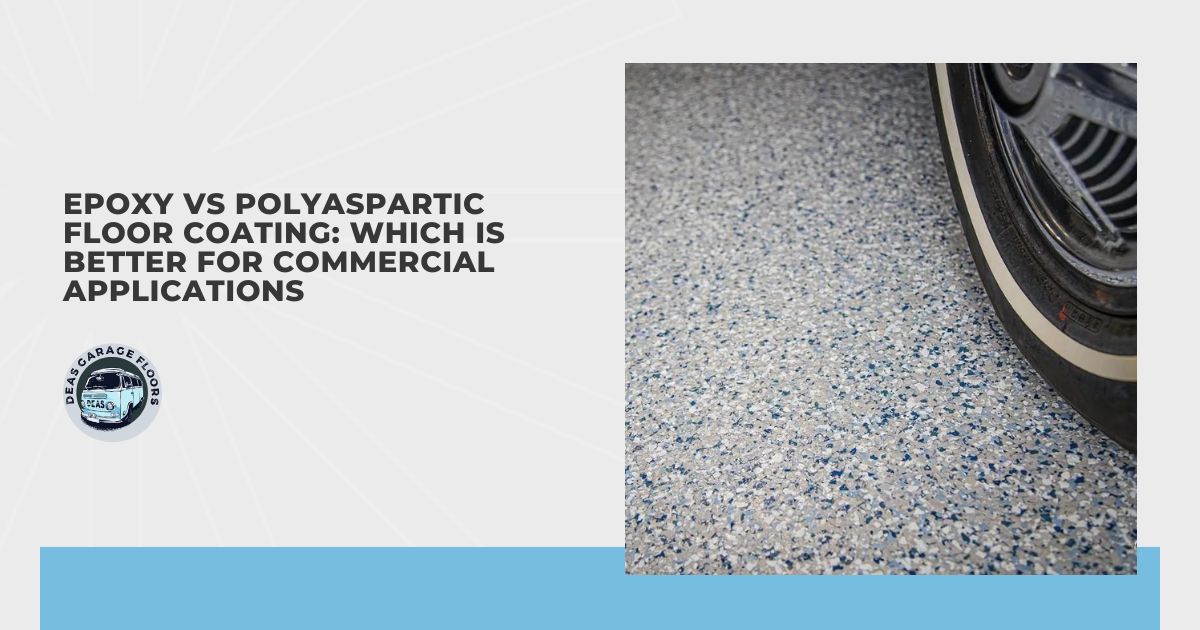
If you’re managing a commercial facility, you know your floors take a beating every single day. Forklifts, foot traffic, spills, and tight turnaround times leave little room for failure. In environments like warehouses, auto shops, retail spaces, and manufacturing facilities, choosing the right system, whether epoxy or polyaspartic floor coating, becomes critical because your flooring is part of your operational backbone, not just a surface.
When it comes to protecting that concrete, most businesses choose between epoxy and polyaspartic floor coating. Epoxy has been widely used for decades and is known for its thickness and initial strength, while a polyaspartic floor coating is a newer technology recognized for faster cure times and stronger performance in demanding conditions. From what I’ve seen in commercial environments, the differences between the two become especially important when downtime, durability, and long-term maintenance directly affect revenue.
To determine whether epoxy or polyaspartic floor coating performs better in commercial applications, we’ll compare the following factors:
- Durability under heavy traffic and equipment
- Installation timeline and operational downtime
- Moisture and environmental resistance
- Chemical and stain protection
- Maintenance requirements and long-term cost
- Safety and slip resistance
- Side-by-side performance comparison
- So which is better?
Let’s take a closer look at how each option performs so you can decide which system truly works for your space.
Durability Under Heavy Traffic and Equipment
If durability is your top concern, this is where the difference between epoxy and polyaspartic floor coating becomes clear. Heavy equipment, rolling traffic, vibration, and day-to-day impact will quickly expose how each system handles stress.
Epoxy: Strong compressive strength allows epoxy to support significant weight without compressing or denting. Where I see it struggle is with repeated impact and constant vibration. Because epoxy cures into a rigid, hard surface, small slab shifts, dropped tools, and nonstop equipment movement can eventually lead to cracking or chipping.
Polyaspartic: Flexibility is where polyaspartic floor coating separates itself. With higher elongation and aggressive concrete adhesion, it’s better equipped to handle vibration, rolling loads, and minor slab movement without fracturing. That balance of strength, flexibility, and abrasion resistance helps it maintain surface integrity under continuous use.
When you compare the two side-by-side, rigidity versus flexibility becomes the real deciding factor. A surface that can absorb stress instead of resisting it outright tends to hold up better in high-traffic, equipment-heavy environments.
Installation Timeline and Operational Downtime
Downtime isn’t just inconvenient. It costs money, disrupts workflow, and puts pressure on tight schedules. When comparing epoxy and polyaspartic floor coatings, cure time and return-to-service speed can make a major difference.
Epoxy: Traditional epoxy coatings typically require multiple applications, longer cure windows, and controlled temperature conditions. Depending on the system and environment, several days may pass before light foot traffic is allowed, and even longer before heavy equipment can return. Extended downtime can interrupt operations, delay deliveries, and reduce productivity.
Polyaspartic: Faster curing is one of the biggest advantages. Polyaspartic floor coating can often be installed in a single day, with return-to-service times measured in hours rather than days. Rapid cure times allow foot traffic, equipment movement, and normal operations to resume much sooner, reducing disruption to your schedule.
If shutting down for several days isn’t realistic for your operation, cure time becomes a serious consideration. The less time your floor is out of service, the less strain you put on your schedule, your staff, and your bottom line.
Moisture and Environmental Resistance
Your building’s conditions matter more than most people realize. Humidity, vapor coming up through your concrete, wash-downs, and seasonal temperature swings can all affect how a coating performs long after installation day.
Epoxy: With epoxy, moisture during installation has to be managed carefully. If vapor transmission through your slab is high, bubbling or delamination can occur unless proper testing and preparation are done. Cooler temperatures can also slow cure times, and high humidity may affect bonding strength.
Polyaspartic: Polyaspartic floor coating offer more flexibility during installation. It can cure in a wider temperature range, and its strong adhesion to properly prepared concrete helps reduce peeling in environments where moisture is present. Faster curing also limits the time your floor is exposed to environmental interference.
Your slab doesn’t behave the same way year-round, and that’s something worth factoring into your decision. I recommend looking at how your space handles humidity and temperature shifts before choosing between an epoxy and polyaspartic floor coating.
Chemical and Stain Protection
Spills are part of running a busy facility. Oils, brake fluids, cleaning agents, solvents, and industrial chemicals don’t just sit on the surface. They test how well your floor resists staining, softening, and long-term damage.
Epoxy: Strong chemical resistance is one of epoxy’s well-known strengths. It performs well against many automotive fluids, oils, and mild chemicals when installed and maintained properly. From my perspective, issues usually arise with prolonged exposure to harsher solvents or acids, especially in areas that aren’t cleaned consistently, which can lead to discoloration or surface wear.
Polyaspartic: Higher resistance to chemical penetration gives polyaspartic floor coating a noticeable advantage in more demanding settings. Its tighter molecular structure helps limit staining, and it maintains surface integrity under exposure to oils, fuels, salt, and common industrial cleaners. Greater UV stability also reduces yellowing in areas exposed to sunlight, which can matter in showrooms, service bays, and open-bay facilities.
Chemical exposure should be part of the decision-making process, especially if your operation involves frequent spills or heavy cleaning. The coating you choose needs to handle real-world messes without breaking down prematurely.
Maintenance Requirements and Long-Term Cost
Initial price often gets the most attention, but ongoing maintenance and lifecycle cost tell the bigger story. The coating you choose will affect how often you’re repairing, recoating, cleaning, and shutting down sections of your facility.
Epoxy: Lower upfront cost makes epoxy appealing for many property owners. Over time, however, surface wear, chipping, or delamination in high-traffic zones can lead to spot repairs or full recoats sooner than expected. Because epoxy is more rigid, damage in one area can spread, which may increase long-term maintenance expenses.
Polyaspartic: Higher initial investment is typical with a polyaspartic floor coating, but durability and adhesion often reduce the need for frequent repairs. Its flexibility helps limit cracking, and strong abrasion resistance supports longer service life in demanding environments. In my experience, fewer shutdowns for repairs can offset the higher upfront cost, especially in busy facilities where downtime affects revenue.
Upfront pricing only tells part of the story. Looking at total cost over several years, including maintenance, repairs, and operational disruption, gives you a clearer picture of which system truly delivers value.
Safety and Slip Resistance
Safety affects your staff, your liability, and your daily operations. Oil drips, water intrusion, dust, and constant foot traffic can quickly turn a smooth surface into a hazard if traction isn’t built into the system.
Epoxy: Slip resistance with epoxy depends heavily on the texture added during installation. A smooth finish can become slick when wet, which is common in service bays, warehouses, and wash-down areas. Broadcast flakes, quartz, or anti-slip additives can improve traction, but long-term performance depends on how well those aggregates hold up under traffic and routine cleaning.
Polyaspartic: Texture integrates well into polyaspartic floor coating systems, and aggregates tend to lock in securely because of strong topcoat adhesion. I’ve noticed that traction tends to remain more consistent over time when those additives are properly encapsulated within a durable top layer. Strong bonding helps maintain grip in areas exposed to water, oils, and frequent cleaning, while UV stability supports better visibility in brighter, open spaces.
Slip resistance should reflect how your floor is actually used. Matching the texture level to your day-to-day operations can reduce risk, protect your team, and support long-term performance.
Side-by-Side Performance Comparison
At this point, the differences between epoxy and polyaspartic floor coating start to stack up. Seeing them next to each other makes it easier to evaluate which system aligns with your facility’s priorities.
| Factor | Epoxy | Polyaspartic |
|---|---|---|
| Durability Under Impact | Strong under static loads, but more rigid and prone to cracking under repeated impact | Strong and more flexible, better at absorbing vibration and movement |
| Cure Time | Several days before full return to service in many cases | Often ready for foot traffic within hours, full return much faster |
| Moisture Tolerance | Sensitive to vapor transmission and humidity during install | Wider installation window, better tolerance to temperature variation |
| Chemical Resistance | Resists many oils and mild chemicals, may degrade with prolonged harsh exposure | High resistance to oils, fuels, cleaners, and reduced staining risk |
| UV Stability | Can yellow in sunlight | Strong UV stability, maintains clarity and color |
| Maintenance Frequency | May require earlier spot repairs in high-traffic zones | Typically longer service life with fewer repairs |
A quick comparison helps clarify what matters most in your space. Usually, I tell business owners to focus less on the initial price tag and more on how each system performs under the exact conditions their floor faces every day.
So Which Is Better?
After looking at durability, cure time, moisture tolerance, chemical resistance, and safety, the comparison becomes less about preference and more about performance. The real question is how much strain your floor handles and how much downtime your operation can afford.
Epoxy: Epoxy can work in lighter-duty environments where traffic is moderate and extended cure times won’t interfere with productivity. It delivers solid compressive strength at a lower upfront cost, which may suit controlled spaces with minimal moisture exposure and limited mechanical stress.
Polyaspartic: Polyaspartic floor coating consistently outperforms epoxy in faster-paced, equipment-heavy settings. Shorter cure times minimize disruption, added flexibility reduces cracking under stress, and stronger adhesion supports longer service life. I’ve seen busy facilities quickly realize that performance and downtime matter more than the initial price difference.
For most high-traffic, revenue-generating environments, polyaspartic simply checks more boxes. If your priority is durability, speed, and long-term value, it’s typically the stronger investment.
Conclusion
Your floor works as hard as the rest of your operation. Every forklift pass, chemical spill, and tight turnaround puts pressure on the coating you choose. After breaking down durability, cure times, moisture resistance, maintenance, and safety, the gap between epoxy and polyaspartic floor coating becomes difficult to ignore. Epoxy still has its place, but in busy, high-demand environments, polyaspartic consistently delivers fewer interruptions and stronger long-term performance. Choosing the system that minimizes downtime and holds up under real-world stress is what ultimately protects your investment.

CONTACT INFO
DEAS Garage Floors
12210 Dargie Dr,
Arlington, TN 38002
Phone
SCHEDULE A CONSULTATION
Contact us, and we will come out and discuss your project free of charge.