What Are the Risks of Skipping Professional Floor Prep Before Applying Garage Floor Coatings?
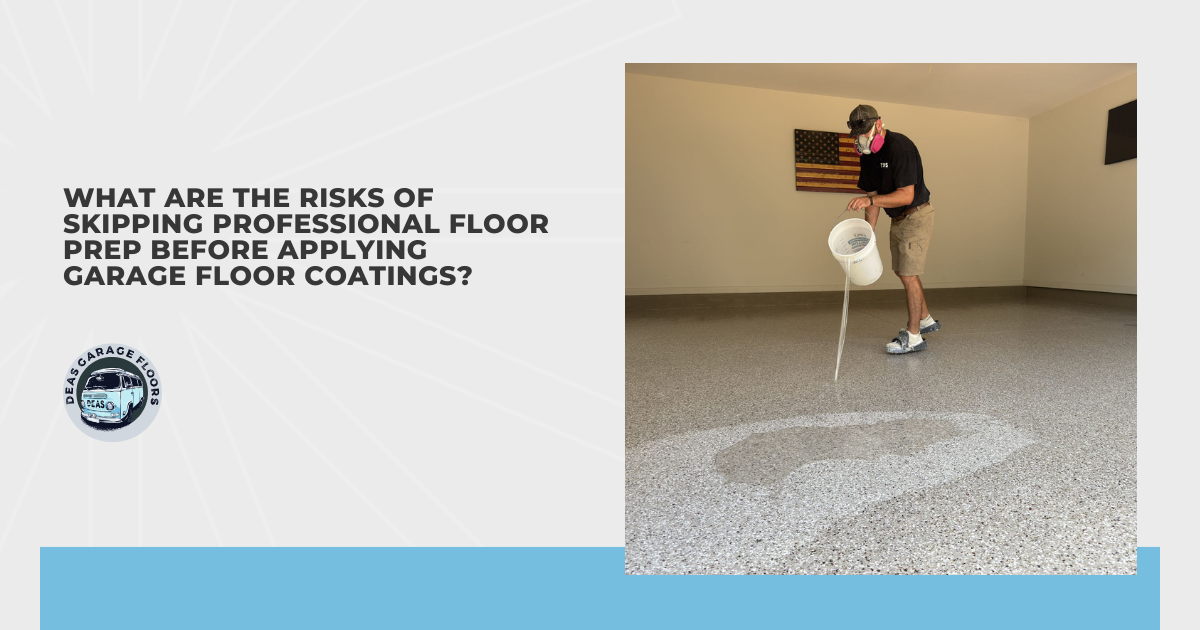
When someone asks me about installing a garage floor coating, the first thing I bring up isn’t the color or the finish. It’s the prep. I’ve seen coatings fail simply because the concrete underneath wasn’t properly prepared. Your garage floor may look clean on the surface, but moisture, oil, dust, and small surface defects can quietly compromise the bond. Skipping professional floor preparation might feel like a shortcut, but it’s often where long-term problems begin.
Before applying a garage floor coating, it’s important to understand what can go wrong when this step is skipped. Here are the most common risks I see when the floor isn’t properly prepared:
- Poor adhesion and premature peeling
- Surface contamination and coating breakdown
- Uneven finish and visible defects
- Rushed installation and improper cure conditions
- Reduced lifespan and higher long-term costs
- Safety and liability concerns
Let’s break down why each of these risks matters and how they can impact the performance of your garage floor coating.
Poor Adhesion and Premature Peeling
Adhesion is what determines whether your garage floor coating lasts for years or starts failing far sooner than expected. Mechanical grinding creates the concrete surface profile (CSP) that allows the coating to penetrate and lock into your slab. Without that profile, true bonding simply doesn’t happen.
Your concrete may look clean, but simple cleaning or acid etching won’t properly open the surface. It can remain too smooth or still contain laitance, the weak, dusty layer left behind during curing. We call this the “sticker effect,” where the coating appears bonded but is really just sitting on top of the slab instead of anchoring into it.
Tire friction, vehicle weight, and temperature swings will expose that weakness quickly. Hot-tire pickup is especially common in garages that weren’t mechanically ground. As your tires heat up from driving and cool once parked, they can soften and grip the coating, pulling at it and eventually lifting it from the concrete.
Once peeling starts, it rarely stays in one spot. Edges continue lifting, moisture works underneath, and full removal becomes the only reliable solution. Skipping professional preparation often turns what should be a long-term garage floor coating into a costly redo.
Surface Contamination and Coating Breakdown
Oil stains, grease, tire marks, and ground-in dirt don’t just sit on top of your concrete. They soak into the pores of your slab. If those contaminants aren’t completely removed before applying a garage floor coating, they interfere with adhesion and weaken the bond from the very beginning.
Pressure washing alone won’t solve the issue. Oils can penetrate deep into the concrete, and without proper degreasing and mechanical grinding, those areas stay compromised beneath the surface. Your floor might look clean, but hidden contamination can still prevent the coating from bonding properly.
Trapped residue can also show up as visible defects. Fisheyes, pinholes, soft spots, or uneven curing often trace back to contamination that wasn’t fully addressed. In my experience, these small preparation shortcuts are what lead to premature breakdown in otherwise high-quality coatings.
Surface preparation isn’t just about making the slab look ready. Fully removing contaminants is what allows your garage floor coating to cure evenly, bond consistently, and perform the way you expect it to.
Uneven Finish and Visible Defects
Even the best garage floor coating can’t hide surface flaws that weren’t addressed beforehand. Cracks, spalling, pitting, and low spots will show through the final finish if they aren’t properly repaired during preparation.
Your concrete may have hairline cracks or small divots that seem minor, but coatings follow the surface profile underneath. Without proper crack filling, patching, and grinding, those imperfections remain visible and can even worsen over time. Coatings enhance the surface, they don’t level or rebuild damaged concrete on their own.
Skipping repairs can also create an inconsistent texture. Raised areas, patched spots, or uneven grinding patterns may lead to noticeable differences in sheen and thickness once the coating cures. Those visual flaws don’t just affect appearance, they can also create weak points where wear begins earlier than expected.
Addressing surface damage before applying a garage floor coating is what ensures a smooth, uniform finish across the entire slab. I often explain to homeowners that whatever exists in the concrete before installation is exactly what the coating will highlight once it cures.
Rushed Installation and Improper Cure Conditions
Coating performance depends not only on surface preparation, but also on how carefully the installation timeline is handled. Temperature, slab dryness, and cure timing all influence how well a garage floor coating hardens and bonds. These materials rely on controlled chemical reactions, and those reactions don’t respond well to shortcuts.
Starting too early in the morning, before dew has evaporated, introduces surface moisture that interferes with bonding. Applying additional coats too quickly, before the base layer has properly flashed or cured, can also weaken the system. Even when the concrete is properly ground and cleaned, rushing between steps increases the risk of compromised performance.
Manufacturers provide specific cure windows and recoat intervals for a reason. If product is mixed, spread, or top-coated outside those guidelines, the chemical reaction may not fully cross-link as intended. The floor might look acceptable at first, but durability under vehicle traffic can suffer.
Taking the full installation timeline seriously matters just as much as mechanical prep. Cutting corners on cure time or ignoring environmental conditions often leads to problems that could have been avoided with proper pacing.
Reduced Lifespan and Higher Long-Term Costs
Skipping proper preparation often shortens the life of your garage floor coating more than most people expect. If the concrete isn’t mechanically profiled, cracks aren’t repaired, or the surface isn’t completely dry at the time of installation, the coating starts out compromised before it ever sees traffic.
Adhesion failure rarely stays isolated. Once sections begin peeling or delaminating, the only reliable fix is mechanical removal. That means grinding the coating completely off the slab before reinstalling it correctly. Adding another layer over a failing surface doesn’t solve the issue, it just hides it temporarily and leads to repeat problems.
Removal, re-grinding, and reapplication cost more than doing the surface preparation properly from the beginning. In most cases, the coating material itself isn’t the problem, the slab preparation is.
Your garage floor coating is only as strong as what it’s bonded to. Cutting corners during preparation usually shows up later in the form of repairs, downtime, and added expense.
Safety and Liability Concerns
Safety often isn’t the first thing people think about during installation, but it becomes very real once a coating starts to fail. If your garage floor coating doesn’t bond properly, lifting edges and flaking sections can develop in areas where you park, walk, or store equipment.
As those sections separate from the slab, they create uneven transitions that increase the risk of trips and slips. Moisture-related bubbling can form raised spots that compromise footing, especially in garages that see rainwater, snow melt, or routine washing.
Inconsistent surface texture can also create problems. Uneven grinding or poorly repaired areas may leave slick spots mixed with rough zones, which affects traction when the floor is wet. Minor peeling can quickly turn into a genuine safety concern once sections begin breaking loose under traffic.
A properly prepared slab helps keep the surface stable, level, and predictable underfoot. Skipping preparation increases the chances that small adhesion issues turn into larger safety problems over time.
Conclusion
Concrete can look clean and ready for a garage floor coating while still hiding issues beneath the surface. Adhesion problems, trapped moisture, contamination, and untreated cracks often stay hidden at first, then show up months later as peeling or bubbling. Once failure begins, the only reliable fix is mechanical removal and starting over. Proper surface preparation is what determines how well the coating bonds, cures, and holds up over time. Skipping that step is usually what turns a long-term upgrade into an avoidable redo.

CONTACT INFO
DEAS Garage Floors
12210 Dargie Dr,
Arlington, TN 38002
Phone
SCHEDULE A CONSULTATION
Contact us, and we will come out and discuss your project free of charge.