5 Things to Ask Before Hiring a Garage Floor Coating Company
Hiring a garage floor coating company is a bigger decision than most homeowners think, and with so many options out there, it's easy to get swayed by a convincing sales pitch. The truth is, the quality of the coating, the preparation process, and the experience behind the installation can vary drastically from one company to the next. I've seen firsthand how those differences play out, and the homeowners who end up with a floor that lasts are almost always the ones who asked the right questions before committing.
- What type of coating do you use?
- How do you prepare the floor before installation?
- Do you offer a warranty?
- Can I see examples of your previous work?
- How long will the installation take?
- Red flags to watch out for
Read on to find out why each of these questions matters and what to listen for in the answers.
What Type of Coating Do You Use?
The type of coating a company uses will determine how your floor looks, performs, and holds up over time. It's one of the first questions you should ask, and the answer will tell you a lot about the company's knowledge and commitment to quality. If they can't clearly explain what they use or why, that's a red flag worth paying attention to.
When it comes to garage floor coatings, there are three options that come up most often. Here's what sets each one apart:
- Epoxy: The most widely used and often most affordable option on the market, epoxy has been a go-to choice for garage floors for decades. However, it's also the most prone to peeling, yellowing, and moisture-related issues, especially in climates with high humidity or temperature swings.
- Polyurea: A step up from epoxy in terms of durability and flexibility, this coating is more resistant to cracking and impact damage. It cures faster than epoxy but can be more difficult to work with, which means the quality of the installation depends heavily on the contractor's experience.
- Polyaspartic: Widely regarded as the most durable and longest-lasting option available for residential garage floors, this coating holds up exceptionally well under heavy traffic and daily use. It's also UV-resistant and chemical-resistant, making it a strong long-term investment for most homeowners.
Ask the company to walk you through the specific product they plan to use and why it's the right fit for your garage. A contractor who knows their craft will answer that question confidently and in detail. The more you understand about what's going on your floor, the better equipped you'll be to make the right call.
How Do You Prepare the Floor Before Installation?
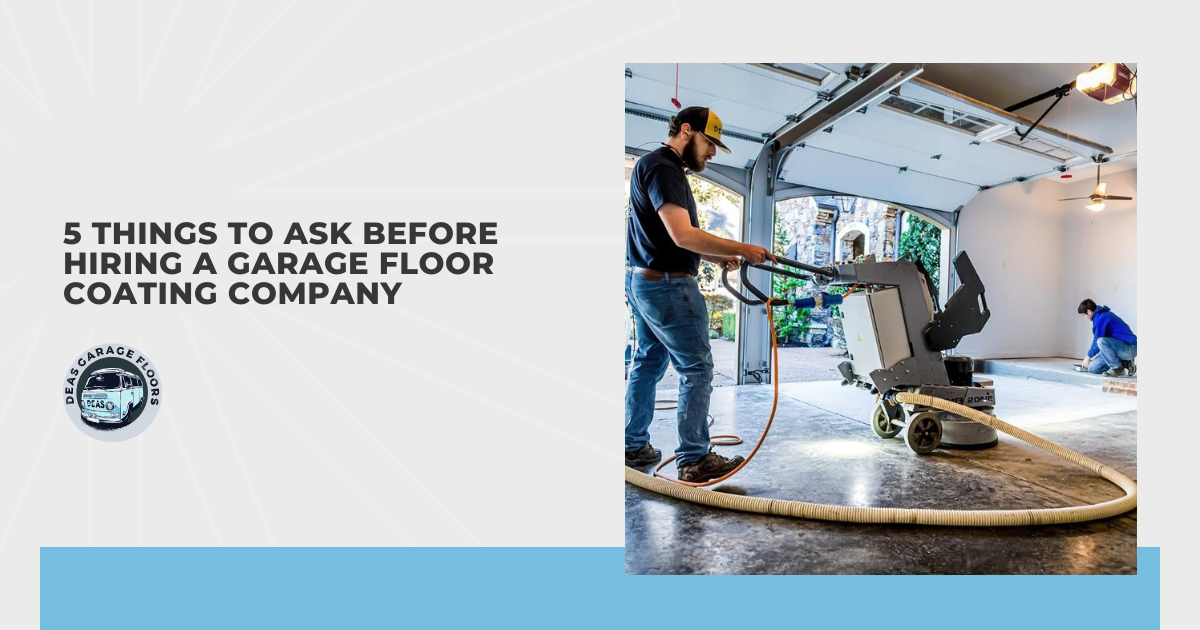
Surface preparation is arguably the most important step in the entire installation process, and it's also the one that's most commonly rushed or skipped altogether. The coating is only as good as the surface it's applied to, and a floor that hasn't been properly prepared will almost always fail prematurely. How a company answers this question will tell you a lot about the quality of work you can expect.
A typical floor prep includes the following processes:
- Cleaning and Degreasing: Any oil, dirt, or chemical residue on the concrete needs to be fully removed before any coating is applied, as even small amounts can prevent proper adhesion.
- Crack and Pit Repair: Existing damage in the concrete should be filled and repaired at this stage, as leaving them untreated can cause the coating to crack or peel along those weak points down the road.
- Moisture Check: Applying a coating over damp concrete is one of the most common causes of premature failure, which is why ensuring the surface is completely dry beforehand is a non-negotiable step.
- Diamond Grinding or Shot Blasting: Mechanical preparation opens up the pores of the concrete and allows the coating to bond effectively rather than simply sitting on top of the surface.
Proper prep work makes a significant difference in the longevity and appearance of a finished floor, and I've seen this firsthand. A company that takes their prep seriously is one that stands behind their work. Don't be afraid to ask them to walk you through every step of their process before committing.
Do You Offer a Warranty?
A warranty is a clear indicator of how confident a company is in their work and the products they use. In my experience, companies that offer strong, written warranties are almost always the ones who put the most care into every step of the installation process. Without one, you have no protection if something goes wrong after the job is done.
There are typically two types of warranties to ask about: a product warranty and a labor warranty. A product warranty covers the coating material itself and is usually provided by the manufacturer, while a labor warranty covers the quality of the installation and is backed by the company doing the work. Both matter, and a reputable company should be able to provide clear documentation for each without hesitation.
When it comes to warranty length, anything under five years should raise an eyebrow. The best companies in the industry back their work with warranties ranging from ten years to lifetime coverage, which reflects the confidence they have in both their materials and their installation process. A lifetime warranty sounds impressive, but it's worth understanding whether it's a full lifetime warranty or a limited one, as the difference between the two can be significant.
It's also worth asking what can void the warranty, as some companies include terms that are easy to unknowingly violate. Using the wrong cleaning products, applying certain chemicals, or failing to follow a specific maintenance routine can all be grounds for voiding coverage depending on the contract. Read the fine print carefully and don't be afraid to ask for clarification on anything that isn't clear before you sign.
Can I See Examples of Your Previous Work?
Any company worth hiring should have a portfolio of completed projects they're proud to show off. Photos, case studies, and customer reviews all give you a realistic sense of the quality and range of work a company is capable of. A strong portfolio tells you more about a company than any sales pitch ever will.
When reviewing their portfolio, look for consistency across different projects, clean lines, even coverage, and a variety of styles and finishes. Pay attention to how they handle different garage sizes, layouts, and flooring conditions, as this will give you a better sense of their experience and versatility. If their portfolio only shows a handful of projects or lacks variety, it may indicate they're still early in their experience as a company.
Online reviews are equally important and worth reading thoroughly. Look beyond the star rating and pay attention to how customers describe the installation process, the professionalism of the crew, and how the company handled any issues that came up. In my opinion, a company's response to negative reviews is just as revealing as the positive ones, as it shows how they handle accountability when things don't go as planned.
How Long Will the Installation Take?
Timeline is something most homeowners don't think to ask about until it's too late. The length of an installation depends on the size of your garage, the condition of the concrete, and the type of coating being applied. A good contractor will give you a clear and honest estimate of the timeline before anyone sets foot in your garage.
Surface preparation alone can take a significant portion of the overall installation time, and it's not something that should be rushed. I've noticed that companies promising an unusually quick turnaround are almost always the ones cutting corners on prep work, and it shows up in the finished product sooner rather than later. For most residential garages, a proper installation including prep work typically takes anywhere from one to two days depending on the scope of the project and the condition of the existing concrete.
Curing time is a separate factor that's equally important to ask about, as it determines how long you'll need to stay off the floor before it's ready for use. Polyaspartic coatings, for example, cure significantly faster than epoxy, often within 24 hours, which means less disruption to your daily routine. Ask the company for a full timeline from the first day of prep to the day you can park your car back in the garage, so you know exactly what to plan for.
Red Flags to Watch Out For
Keep an eye out for these warning signs when evaluating any garage floor coating company. Spotting them early can save you from a costly mistake down the road.
- Extremely low pricing: A price that seems too good to be true usually is. Unusually low quotes often indicate cheaper materials, inexperienced installers, or a preparation process that cuts corners to keep costs down.
- One-day systems with little prep work: A quality installation takes time, and any company that promises to have your floor done in a few hours is almost certainly skipping critical steps in the preparation process.
- No written warranty: A company that can't or won't put their warranty in writing isn't one you should feel comfortable trusting with your garage floor.
- Limited product information: If a company can't clearly explain what products they use or why, it raises serious questions about their knowledge and transparency.
- High-pressure sales tactics: A confident contractor lets their work speak for itself. Feeling rushed or pressured into making a decision on the spot is a sign that something isn't right.
Trust your instincts. If something feels off during the sales process, it's worth paying attention to before you commit.
Conclusion
The right garage floor coatings company will have no problem answering every one of these questions clearly and confidently. Understanding what type of coating they use, how they prepare the surface, what their warranty covers, what their previous work looks like, and how long the job will take gives you a complete picture of who you're really hiring. A company that's transparent about all of it is one worth trusting with your garage floor.

CONTACT INFO
DEAS Garage Floors
12210 Dargie Dr,
Arlington, TN 38002
Phone
SCHEDULE A CONSULTATION
Contact us, and we will come out and discuss your project free of charge.